
The Difference Between Physical Therapy and Strength Training with a Chronic Pain Specialist
By Ashley Hernandez
The Difference Between Physical Therapy and Strength Training with a Chronic Pain Specialist
By Ashley Hernandez
Physical therapists are exceptional at what their frameworks are designed for: acute pain. If you twist an ankle, need rehab immediately following surgery, or experience a sudden onset of pain that’s only been affecting you for a few weeks, a physical therapist is often the right first call. They typically treat patients for a brief time (a few weeks to a few months) and then discharge them once baseline function returns.
The standard physical therapy process is effective for treating initial, acute pain. However, it was never designed to solve chronic pain issues long-term.
Over the years, we have worked with many clients who previously completed physical therapy for the exact same pain point they bring to us. They almost always come to us saying, “Physical therapy didn’t work.”
We don’t believe this is true.
The Actual Role of Physical Therapy
We will often refer our clients to physical therapists while they are actively training with us. Some might assume this means we’ve met our match, or don’t know how to work with a specific issue. That is also untrue.
The primary goal of physical therapy is not to guarantee lifetime resilience, it is to restore your basic, day-to-day functionality so you can go about your daily routine without active distress. If you worked with a physical therapist and your pain dissipated, the physical therapy was successful. If the pain returned weeks or months after you stopped performing the exercises the physical therapist gave you, the issue isn’t that the PT failed; it’s that the rehab process was cut short before true tissue capacity and global movement patterns were built.
When a client requires localized manual manipulation to free up a joint, or experiences a sudden acute flare-up outside our sessions, we ask them to visit a physical therapist. They handle the immediate symptom reduction so we can safely continue building long-term capacity.
Physical therapy plays a vital role in healthcare. But the way we approach chronic pain is fundamentally different.
Isolating Symptoms vs. Integrating Systems
Our methodology focuses on the whole body as a dynamic, interconnected system.
If you present with lower back pain, we evaluate you from head to toe. We want to know how your feet move, how your shoulders move, how your body moves together, to determine the root cause of your back pain.
Thoracic Spine Restriction: If your upper back and shoulders lack mobility, your lumbar spine is forced to work ten times harder to compensate.
Ankle Mobility Deficits: If your ankles lack sufficient dorsiflexion, your lower back will excessively flex to compensate every time you squat, sit, or pick up something off the floor.
Lateral Instability: If one leg or hip is significantly weaker than the other, your pelvis loses structural support during basic daily movement, forcing the lower back muscles to seize up in self-defense.
There are many reasons why your back may hurt, but our work with clients reveals one consistent truth: your back rarely hurts because of your back.
The human body operates as one unit. Nothing moves in total isolation and everything affects everything. When we analyze movement, we evaluate how every joint, muscle, and plane of motion interacts with the rest of the system.
By contrast, traditional physical therapy models often evaluate the body in isolation - focusing strictly on the site of pain and, if you’re lucky, neighboring muscle groups. Or, they immediately default to addressing the glute med for every issue. While this isolated approach works brilliantly for cooling down acute tissue irritation, long-term freedom of movement requires an integrated, whole-body approach.
Moving Past Clamshells and Side Planks
Our protocols deliver lasting relief because they pick up where physical therapy leaves off.
Instead of prescribing clam shells and isometrics for the rest of your life, we progressively load your system with dynamic movements like cross-body squats, landmine rotations, and heavy farmer carries. We prescribe functional exercises that mimic real-life movement, promoting full-body muscle recruitment and joint stability.
Do you have to keep moving and strength training indefinitely? Absolutely. That is what the body is designed to do. Use it or lose it. But you do not have to live in a constant loop of entry-level rehab exercises just to avoid back pain. In order to build permanent resilience, you must strengthen your entire body across different positions, intensities, and planes of motion.
Case Study: A 6-Week Progression from Acute Pain to Global Movement
Below is a real-world progression model for a client who came to us in a hyper-sensitive, high-pain state:
Phase 1: Regulating the Nervous System & Baseline Retraining
Load vs Capacity (Homework): Daily downregulating nervous system work - breathwork using a 3-6 pattern (3 second inhale, 6 second exhale), with plans to progress to a 4-8 pattern.
Movement Focus: The client struggled to brace their core during movement. We implemented static holds requiring core engagement without movement.
Symptom Management: Presenting with severe lower back pain (8/10) on the right side and an inability to engage their glutes, we prescribed targeted clam shells and glute bridges to restore function and decrease pain symptoms.
This initial phase mirrors where a physical therapist might begin. The key difference is that we do not stay here.
Phase 2 (Week 2): Introducing Dynamic Load and Unilateral Stability
Load vs. Capacity (Homework): Advanced daily breathwork (4-8 pattern).
Movement Integration: Once static core bracing was mastered, we introduced limb movement while maintaining a stable torso via the Pallof Press.
Progressive Loading: Pain levels decreased from an 8/10 to a 4/10. With glute recruitment restored, we progressed to side-plank clamshells and mini-band hip thrusters.
Phase 3 (Week 4): Kinetic Integration
Load vs. Capacity (Homework): Maintained down-regulation breathwork and added a daily hydration target (1 gallon/day).
Movement Integration: With control established, we progressed to full-body rotational strength via the Landmine Twist, requiring integrated core bracing through global movement.
Functional Strength: Side-plank clamshells and hip thrusters were now completely pain-free, allowing us to successfully transition to bodyweight deadlifts with zero pain.
Why Long-Term Success Takes Time
By week 6 this client was entirely free of their initial pain. We continued coaching them for a full year. Why? Because while 6 weeks is enough time to calm down symptom intensity, it is not enough time to rewrite years of compensatory motor patterns, build structural tissue capacity, or solidify the lifestyle habits required to stay pain-free.
Recovery is never a linear path. There will be unexpected setbacks and flare-ups along the way. Navigating those moments safely requires long-term guidance and self-efficacy.
When I injured my own back at 19 years old, it took a full 4 years of systematic strength training and movement re-education to rebuild my body to the point where I felt completely confident in its resilience. I spent 2 weeks in physical therapy immediately after the injury, was discharged and told I was good to go, then injured myself the very next week because my body hadn’t built the actual capacity to handle my usual training routine.
It took me years to learn how to manage flare-ups, understand my body’s warning signs, and build true capacity. You could spend years figuring it out as well, or you could work with a chronic pain specialist and cut that time in half.
Physical therapists are exceptional at what their frameworks are designed for: acute pain. If you twist an ankle, need rehab immediately following surgery, or experience a sudden onset of pain that’s only been affecting you for a few weeks, a physical therapist is often the right first call. They typically treat patients for a brief time (a few weeks to a few months) and then discharge them once baseline function returns.
The standard physical therapy process is effective for treating initial, acute pain. However, it was never designed to solve chronic pain issues long-term.
Over the years, we have worked with many clients who previously completed physical therapy for the exact same pain point they bring to us. They almost always come to us saying, “Physical therapy didn’t work.”
We don’t believe this is true.
The Actual Role of Physical Therapy
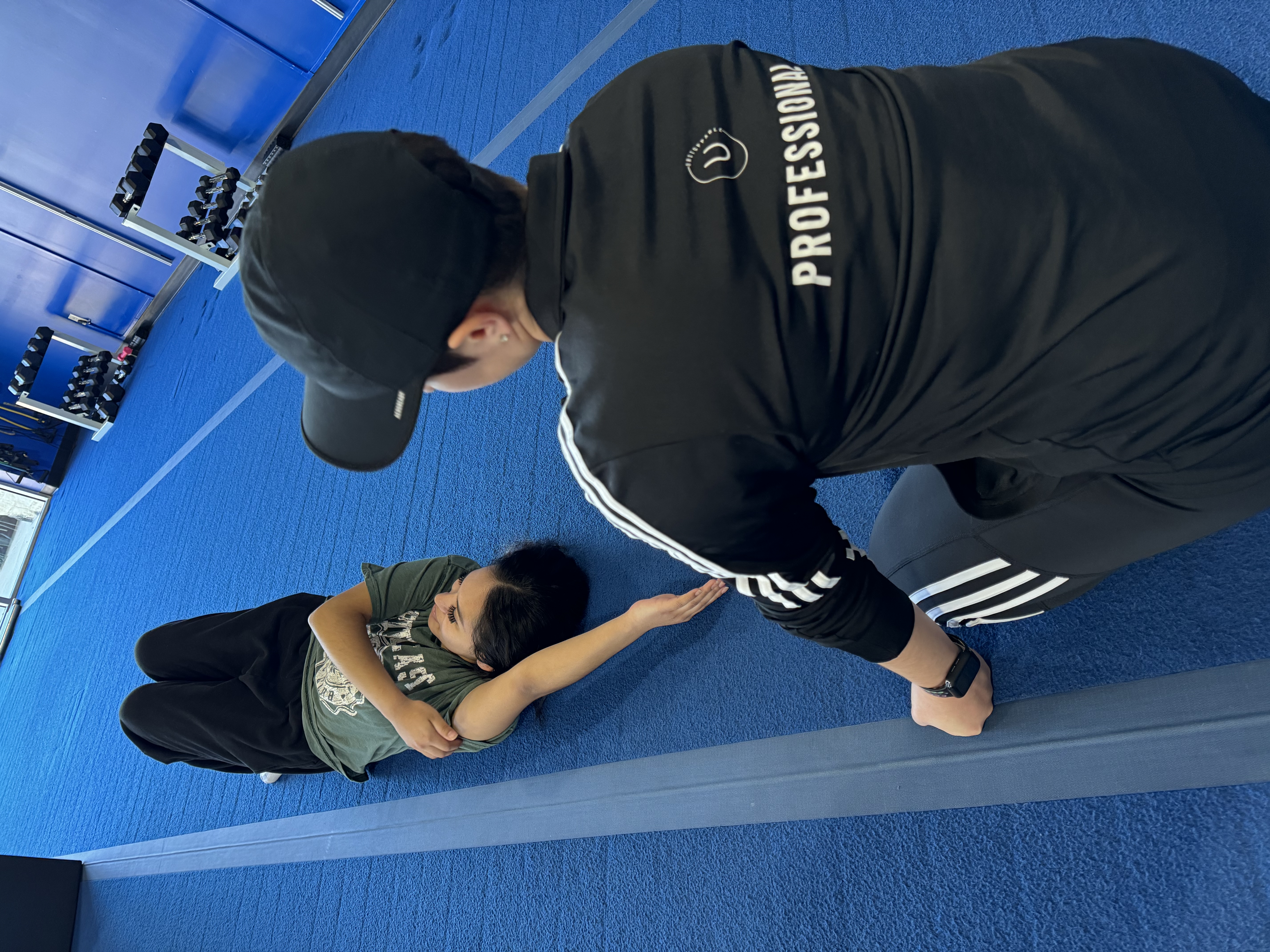
We will often refer our clients to physical therapists while they are actively training with us. Some might assume this means we’ve met our match, or don’t know how to work with a specific issue. That is also untrue.
The primary goal of physical therapy is not to guarantee lifetime resilience, it is to restore your basic, day-to-day functionality so you can go about your daily routine without active distress. If you worked with a physical therapist and your pain dissipated, the physical therapy was successful. If the pain returned weeks or months after you stopped performing the exercises the physical therapist gave you, the issue isn’t that the PT failed; it’s that the rehab process was cut short before true tissue capacity and global movement patterns were built.
When a client requires localized manual manipulation to free up a joint, or experiences a sudden acute flare-up outside our sessions, we ask them to visit a physical therapist. They handle the immediate symptom reduction so we can safely continue building long-term capacity.
Physical therapy plays a vital role in healthcare. But the way we approach chronic pain is fundamentally different.
Isolating Symptoms vs. Integrating Systems
Our methodology focuses on the whole body as a dynamic, interconnected system.
If you present with lower back pain, we evaluate you from head to toe. We want to know how your feet move, how your shoulders move, how your body moves together, to determine the root cause of your back pain.
Thoracic Spine Restriction: If your upper back and shoulders lack mobility, your lumbar spine is forced to work ten times harder to compensate.
Ankle Mobility Deficits: If your ankles lack sufficient dorsiflexion, your lower back will excessively flex to compensate every time you squat, sit, or pick up something off the floor.
Lateral Instability: If one leg or hip is significantly weaker than the other, your pelvis loses structural support during basic daily movement, forcing the lower back muscles to seize up in self-defense.
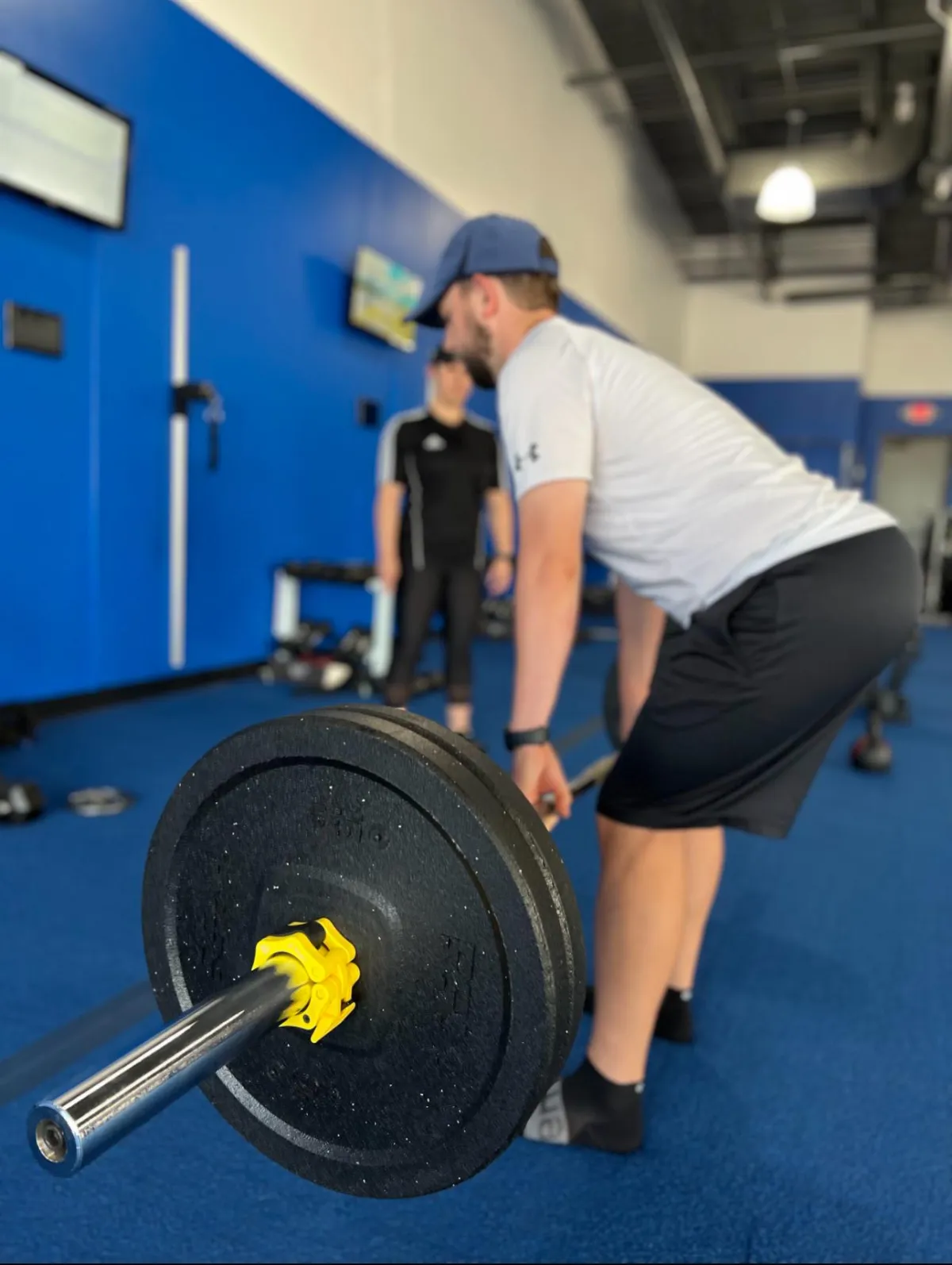
There are many reasons why your back may hurt, but our work with clients reveals one consistent truth: your back rarely hurts because of your back.
The human body operates as one unit. Nothing moves in total isolation and everything affects everything. When we analyze movement, we evaluate how every joint, muscle, and plane of motion interacts with the rest of the system.
By contrast, traditional physical therapy models often evaluate the body in isolation - focusing strictly on the site of pain and, if you’re lucky, neighboring muscle groups. Or, they immediately default to addressing the glute med for every issue. While this isolated approach works brilliantly for cooling down acute tissue irritation, long-term freedom of movement requires an integrated, whole-body approach.
Moving Past Clamshells and Side Planks
Our protocols deliver lasting relief because they pick up where physical therapy leaves off.
Instead of prescribing clam shells and isometrics for the rest of your life, we progressively load your system with dynamic movements like cross-body squats, landmine rotations, and heavy farmer carries. We prescribe functional exercises that mimic real-life movement, promoting full-body muscle recruitment and joint stability.
Do you have to keep moving and strength training indefinitely? Absolutely. That is what the body is designed to do. Use it or lose it. But you do not have to live in a constant loop of entry-level rehab exercises just to avoid back pain. In order to build permanent resilience, you must strengthen your entire body across different positions, intensities, and planes of motion.
Case Study: A 6-Week Progression from Acute Pain to Global Movement
Below is a real-world progression model for a client who came to us in a hyper-sensitive, high-pain state:
Phase 1: Regulating the Nervous System & Baseline Retraining
Load vs Capacity (Homework): Daily downregulating nervous system work - breathwork using a 3-6 pattern (3 second inhale, 6 second exhale), with plans to progress to a 4-8 pattern.
Movement Focus: The client struggled to brace their core during movement. We implemented static holds requiring core engagement without movement.
Symptom Management: Presenting with severe lower back pain (8/10) on the right side and an inability to engage their glutes, we prescribed targeted clam shells and glute bridges to restore function and decrease pain symptoms.
This initial phase mirrors where a physical therapist might begin. The key difference is that we do not stay here.
Phase 2 (Week 2): Introducing Dynamic Load and Unilateral Stability
Load vs. Capacity (Homework): Advanced daily breathwork (4-8 pattern).
Movement Integration: Once static core bracing was mastered, we introduced limb movement while maintaining a stable torso via the Pallof Press.
Progressive Loading: Pain levels decreased from an 8/10 to a 4/10. With glute recruitment restored, we progressed to side-plank clamshells and mini-band hip thrusters.
Phase 3 (Week 4): Kinetic Integration
Load vs. Capacity (Homework): Maintained down-regulation breathwork and added a daily hydration target (1 gallon/day).
Movement Integration: With control established, we progressed to full-body rotational strength via the Landmine Twist, requiring integrated core bracing through global movement.
Functional Strength: Side-plank clamshells and hip thrusters were now completely pain-free, allowing us to successfully transition to bodyweight deadlifts with zero pain.
Why Long-Term Success Takes Time
By week 6 this client was entirely free of their initial pain. We continued coaching them for a full year. Why? Because while 6 weeks is enough time to calm down symptom intensity, it is not enough time to rewrite years of compensatory motor patterns, build structural tissue capacity, or solidify the lifestyle habits required to stay pain-free.
Recovery is never a linear path. There will be unexpected setbacks and flare-ups along the way. Navigating those moments safely requires long-term guidance and self-efficacy.
When I injured my own back at 19 years old, it took a full 4 years of systematic strength training and movement re-education to rebuild my body to the point where I felt completely confident in its resilience. I spent 2 weeks in physical therapy immediately after the injury, was discharged and told I was good to go, then injured myself the very next week because my body hadn’t built the actual capacity to handle my usual training routine.
It took me years to learn how to manage flare-ups, understand my body’s warning signs, and build true capacity. You could spend years figuring it out as well, or you could work with a chronic pain specialist and cut that time in half.



Not Physical Therapy.
Not Fitness.
Axiomatic Protocols for Outliers Refusing Physical Limits.
Work With Us
UNSTOPPABLE Archive
Client Case Studies
About Us
Privacy Policy | Terms & Conditions | Accessibility Statement
Not Physical Therapy.
Not Fitness.
Axiomatic Protocols for Outliers Refusing Physical Limits.